Magnesium L-Threonate for Memory: Benefits, Dosing and How It Fits a Stack
Quick answer: what are the benefits of magnesium L-threonate for memory?
Magnesium L-threonate is a magnesium salt engineered to raise magnesium inside the brain, where it supports learning-related receptors and synaptic density. A twelve-week randomised trial in 44 older adults with cognitive impairment reported a significant gain on a composite cognitive measure against placebo. Benefits are modest, build over weeks, vary between people, and it does not treat or cure disease.
- Why it is special: it crosses the blood-brain barrier better than common magnesium forms.
- Typical dose: 1,500–2,000 mg/day (~100–145 mg elemental), split with food.
- Main caution: dose-dependent digestive upset; kidney-disease patients need supervision.

Magnesium L-threonate is the rare nootropic ingredient with a genuinely interesting origin story and a search volume to match — the term and its plural cluster together draw tens of thousands of searches every month. It was developed by researchers connected to MIT to solve a specific problem: your brain needs magnesium, but the magnesium in most supplements barely reaches it. This guide explains why that matters for memory, what the human trials actually show, how to dose it sensibly, and where it belongs in a wider stack alongside a formula like Memoclear.
Why magnesium L-threonate is different from every other magnesium
Magnesium is one of the most important minerals in the body, involved in hundreds of enzymatic reactions, and a large share of adults do not get enough of it from diet. That alone makes topping up sensible. But the brain is a fortress. The blood-brain barrier is selective by design, and most magnesium forms — oxide, citrate, glycinate — are good at raising magnesium in the bloodstream and muscles while doing relatively little to lift it inside the brain itself.
That is the gap magnesium L-threonate was built to close. By binding magnesium to L-threonic acid, a metabolite of vitamin C, the compound was engineered to improve delivery into the central nervous system. In the original animal work, this form raised brain magnesium concentrations in a way ordinary magnesium did not, and that increase tracked with improvements in learning and memory measures. The mechanism people point to is magnesium's role at the NMDA receptor, a gatekeeper for the kind of synaptic signalling that underlies learning, and its apparent effect on synaptic density — the number of working connections between neurons.
Two honest caveats belong right here. First, "crosses the blood-brain barrier better" is a real and meaningful property, but it is a mechanism, not a promise of results. Second, much of the foundational evidence is preclinical. Animal and cell studies tell you something is plausible; they do not tell you how large the effect is in a person. So the interesting question is what the human trials found.
What the human evidence on magnesium L-threonate actually shows
The most cited human data comes from trials of the branded form, Magtein. The anchor study is a 2016 twelve-week randomised, double-blind, placebo-controlled trial in adults aged 50–70 with cognitive impairment, which reported a significant improvement in overall cognitive ability against placebo with a large effect size, and near-restoration of the group's impaired executive function. Read that with a clear eye. It enrolled 44 people in total, it was run by the ingredient's own developer, and the outcome is movement on a test battery in a specific population over a specific window — not a rewind button for the brain. A larger 2025 randomised, double-blind, placebo-controlled trial of Magtein in adults looked at cognition and sleep quality in a broader population, and results in healthy adults have been more mixed than the headline framing implies.
Put in plain terms, the human evidence is encouraging and still modest in scope. The trials are relatively small, several involve the ingredient's commercial backers, and the strongest signal appears in older adults and in people whose starting magnesium status or cognitive baseline left room to move. That is a familiar pattern in this field: an ingredient with real mechanistic backing and a handful of supportive human studies, best described as promising rather than settled. It clears a higher bar than most herbal nootropics, and it has not been replicated as widely as, say, caffeine with L-theanine. For how we weigh single trials against replicated ones across the whole category, see our breakdown of what the numbers on a brain-booster label really mean.

How much magnesium L-threonate to take, and when
Dosing is where a lot of buyers get confused, because the compound weight and the elemental magnesium weight are two different numbers. Trials typically use about 1,500 to 2,000 mg of magnesium L-threonate per day. That compound weight supplies only around 100 to 145 mg of actual elemental magnesium, because the threonate carrier makes up most of the mass. Both numbers should be on a good label; if only the compound weight is shown, do the mental note that the elemental figure is much smaller.
The practical protocol that mirrors the research looks like this. Split the total into two or three doses taken with food, which softens the digestive side effects and smooths absorption. Many people place part of the dose in the evening, both because it fits daily magnesium needs and because magnesium can feel mildly calming. Start at the lower end of the range and increase gradually over a week or two rather than jumping straight to the full amount. And count your total magnesium from all sources — other supplements, a multivitamin, fortified foods — against what your doctor considers appropriate, because more is not better once you are replete.
Expect a slow build. This is not a stimulant you feel within the hour; it is a daily nutrient strategy. The trials that reported gains ran for about twelve weeks, so give it six to twelve weeks of consistent use before deciding whether it does anything for you.
Prefer a daily brain formula that shows every amount?
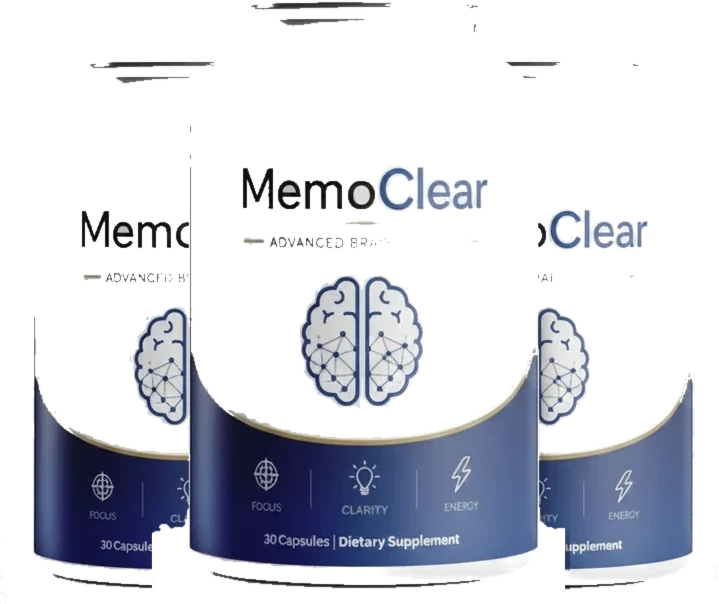
Memoclear is a stimulant-free once-daily capsule built around blood-flow amino acids and B-vitamin support, with the full Supplement Facts panel published so you can check compound weights and elemental amounts yourself — the same scrutiny magnesium L-threonate deserves.
Check Availability & OptionsSide effects and who should be careful
For most healthy adults, magnesium L-threonate is well tolerated, and its side-effect profile is exactly what you would expect from a magnesium supplement. The most common issues are dose-dependent and digestive: loose stools, mild nausea, or general stomach discomfort. These usually ease when you take it with food and split the dose rather than swallowing it all at once. Some people notice drowsiness, which is a reason to weight the dose toward the evening rather than a reason to stop.
Two cautions carry more weight. People with kidney disease should only use magnesium supplements under medical supervision, because impaired kidneys clear magnesium less efficiently and levels can climb. And anyone on prescription medication should check for interactions — magnesium can affect the absorption of certain antibiotics and other drugs, and timing them apart usually solves it, but that is a conversation to have with a pharmacist rather than a guess to make alone. If you want the broader picture on tolerability across memory ingredients, our guide to memory supplement side effects and safety covers the interactions worth knowing.
Magnesium L-threonate at a glance
| Question | Practical answer |
|---|---|
| What it is | Magnesium bound to L-threonic acid, designed for brain delivery |
| Typical daily dose | 1,500–2,000 mg compound (~100–145 mg elemental) |
| How to take it | Split 2–3x with food; part in the evening |
| Time to assess | 6–12 weeks of consistent daily use |
| Common side effects | Loose stools, mild nausea, occasional drowsiness |
| Use with caution | Kidney disease, certain medications — ask a clinician |
A better delivery mechanism is a reason to be interested, not a reason to be certain. Magnesium L-threonate earns a place in the conversation on the strength of its design and a few good human trials — and it still asks for the same patience and scepticism as everything else.
How magnesium L-threonate fits into a memory stack
Few people take a single ingredient in isolation, and magnesium L-threonate is a reasonable stack member precisely because it works on a different lever than most cognitive ingredients. Where blood-flow amino acids target circulation and choline sources feed neurotransmitter production, this targets the mineral environment inside the brain and the receptors that govern learning signals. Those are complementary jobs, not redundant ones.
The sensible way to build any stack is one change at a time. Adding four ingredients at once means that if something helps or upsets your stomach, you will not know which one did it. Introduce magnesium L-threonate on its own, give it its several weeks, and only then layer in or adjust the rest. If you are thinking about combining it with choline and mushroom ingredients, our walkthrough of a citicoline, bacopa and lion's mane nootropic stack shows how those pieces are usually arranged and dosed.
This is also where a broad daily base formula earns its place. Rather than assemble every mechanism from separate tubs, many people prefer a single once-daily capsule that covers blood flow and B-vitamin support, then consider a targeted addition like magnesium L-threonate on top. That is the role Memoclear is designed to play: a transparent, stimulant-free foundation you can build around, with every amount published so nothing double-counts by accident.

Setting honest expectations
Here is the ceiling, stated plainly. Magnesium L-threonate is not a treatment for Alzheimer's disease, dementia or any other diagnosed condition, and no supplement has been shown to prevent, treat or reverse those processes. The trial results above describe test performance in a small study, not a clinical outcome you can bank on.
Part of what people feel may also be the least exciting explanation: correcting a real magnesium shortfall, or sleeping a little better, can improve how you think without any exotic mechanism at all. That is a genuine benefit, and it is also a reason a blood test and a look at your sleep may be a better first move than any capsule. If your memory or thinking has changed noticeably over weeks or months, treat that as a medical situation and see a clinician rather than reaching for a supplement.
Medical note: this article is general information, not medical advice. Speak to a healthcare professional before starting magnesium L-threonate or any supplement, especially if you have kidney disease, are pregnant or nursing, or take prescription medication.
Frequently asked questions
What does magnesium L-threonate do for the brain?
Magnesium L-threonate is a magnesium salt developed to raise magnesium levels inside the brain, which most common magnesium forms do poorly. In the brain, magnesium supports the receptors involved in learning and the density of synaptic connections. Human trials suggest modest support for memory and cognitive function, especially in older adults, though it is not a treatment for any disease.
How much magnesium L-threonate should I take daily?
Studies typically use about 1,500 to 2,000 mg of magnesium L-threonate per day, which supplies roughly 100 to 145 mg of elemental magnesium. It is usually split into two or three doses taken with food, with part of the dose in the evening. Start at the lower end, increase gradually, and stay within the total magnesium your doctor advises.
Does magnesium L-threonate have side effects?
The main side effects are dose-dependent and digestive: loose stools, mild nausea or stomach discomfort, usually eased by taking it with food and splitting the dose. Some people notice drowsiness, which is why an evening dose can suit them. People with kidney disease should only use it under medical supervision, because impaired kidneys clear magnesium less effectively.
How long before magnesium L-threonate improves memory?
It is not a same-day ingredient. Trials that reported cognitive gains ran for about twelve weeks of consistent daily use, so plan on six to twelve weeks before judging it. Benefits are modest and vary between individuals, and correcting an underlying magnesium shortfall or improving sleep may account for part of what people feel.
Related reading
Scientific references
- Lopresti A.L. et al. — The effects of magnesium L-threonate (Magtein) on cognitive performance and sleep quality in adults: a randomised, double-blind, placebo-controlled trial (Frontiers in Nutrition, 2025)
- NIH Office of Dietary Supplements — Magnesium fact sheet for health professionals
- NIH NCCIH — Dietary supplements and cognitive function, dementia, and Alzheimer’s disease: what the science says
- National Institute on Aging — Cognitive health and older adults, including supplements and brain health
- Harvard Health Publishing — What you should know about magnesium
Build your stack on a transparent base
A stimulant-free daily capsule with every amount published, so you can add a targeted ingredient like magnesium L-threonate without guessing what is already in the mix. Start with a foundation you can actually audit.
New to the category? Start with the full Memoclear ingredient and label guide, or read which nootropics actually work.