How Long Nootropics Take to Work
Quick answer: how long do nootropics take to work?
How long nootropics take to work depends entirely on the ingredient. Fast amino acids like L-theanine act in about 20 to 40 minutes and citicoline sharpens attention within days, but bacopa and lion's mane build over 4 to 12 weeks. Judge any full stack only after 8 to 12 consistent weeks.
- Same day: L-theanine and caffeine act in roughly 20–40 minutes.
- Days: citicoline can sharpen attention within the first week.
- Weeks: bacopa peaks around 8–12 weeks; lion's mane needs 4–12 weeks of daily use.

Two days into a new bottle, a lot of people quietly decide their supplement "isn't doing anything" and set it aside. It is one of the most common and most expensive mistakes in this whole category, because it usually says more about expectations than about the product. The honest answer to how long nootropics take to work is: it depends on the ingredient, and the range is enormous — from about twenty minutes for a simple amino acid to a full twelve weeks for a slow-building herb. Judging the second by the clock of the first is a guaranteed way to give up too soon.
This guide sets realistic expectations so you can run a fair trial. We break the timeline into three tiers, explain why the slow ingredients are slow, and finish with the single rule that matters most: give a full stack eight to twelve consistent weeks before you decide.
Why "how long nootropics take to work" has no single answer
The phrase lumps together two completely different kinds of effect. Some ingredients produce an acute effect — a same-day change in alertness or attention that appears within an hour and fades within hours. Others produce a cumulative effect — a change that only emerges after the compound has been taken daily for weeks, as it gradually shifts something in the brain's chemistry or structure. Caffeine is the poster child for the first; bacopa monnieri is the poster child for the second.
Most well-designed daily brain formulas lean mainly on the cumulative type, because those are the ingredients associated with lasting support rather than a short buzz. That is precisely why patience is not optional. If you expected an acute hit and the formula is built on a slow build, you will conclude it failed on exactly the timeline where it had no chance to show anything.
The three-tier nootropic timeline
Tier 1 — minutes to hours (acute). These you can feel the same day.
- L-theanine (often paired with caffeine): a calm, focused alertness that typically arrives in about 20 to 40 minutes and lasts a few hours.
- Caffeine: alertness within 30 to 60 minutes, peaking around an hour.
- Other free amino acids such as tyrosine under acute stress: same-day, situational effects rather than a lasting change.
Tier 1 ingredients are useful and real, but their effect is a state you enter and leave, not a foundation you build. They are the reason some products feel like they "work instantly" — a sensation that says nothing about long-term support.
Tier 2 — days to a couple of weeks. Here the effect is neither instant nor slow.
- Citicoline supports attention and processing speed, and in some trials sharper attention shows up within the first days to a couple of weeks of daily use.
- Creatine for cognitive benefit, particularly under sleep loss or heavy mental load, builds as tissue stores saturate over roughly one to two weeks.
Tier 3 — four to twelve weeks (cumulative). This is where most of the "serious" long-term ingredients live, and where impatience does the most damage.
- Bacopa monnieri: its memory benefits accumulate gradually, and trials consistently show effects that peak around eight to twelve weeks. Testing bacopa for a fortnight is like judging a fitness programme after two gym sessions.
- Lion's mane: acts on slow neural support processes, with human trials typically running four weeks or longer before differences appear.
- Omega-3 DHA and phosphatidylserine: membrane-level ingredients that are built in over weeks, usually assessed at the 12-week mark.
The pattern is unmistakable: the ingredients with the most interesting long-term stories are the ones that demand the most patience. We rank which of them actually hold up under repeated testing in our deeper piece on the nootropics that actually work by replicated trial evidence.
Nootropic timeline at a glance
| Ingredient | Type of effect | When you can judge it | What to expect |
|---|---|---|---|
| L-theanine (+ caffeine) | Acute | ~20–40 minutes | Calm, focused alertness for a few hours |
| Citicoline | Fast build | Days to ~2 weeks | Sharper attention and processing speed |
| Creatine | Build to saturation | ~1–2 weeks | Support under sleep loss or mental load |
| Lion's mane | Cumulative | 4–12 weeks | Gradual cognitive and mood support |
| Bacopa monnieri | Cumulative | 8–12 weeks (peak) | Improved memory and recall |
| Omega-3 DHA / phosphatidylserine | Cumulative | ~12 weeks | Membrane-level memory support |
Ready to start the 8-to-12-week clock properly?
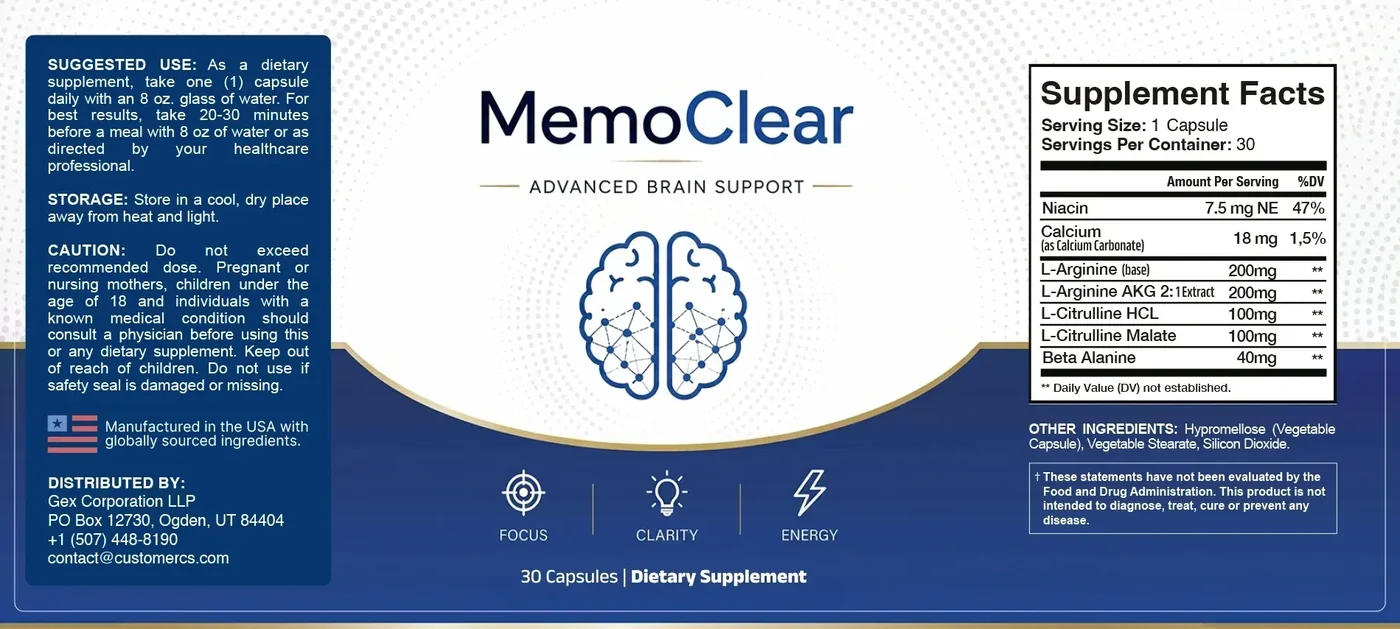
Memoclear is a stimulant-free daily capsule built for consistency, with its full panel published so you know exactly which ingredients you are giving time to work. A multi-month supply makes a fair trial far easier to actually complete.
Check Availability & OptionsWhy the slow ingredients are slow — and why that is a good sign
It is tempting to read a slow onset as weakness. It is usually the opposite. An ingredient that changes something meaningful about how the brain functions — membrane composition, the density of certain receptors, the gradual support of neural maintenance — cannot do that in an afternoon, because biology does not rebuild itself that fast. The delay is the fingerprint of a real, structural change rather than a fleeting stimulant sensation.
Bacopa is the clearest case. Its memory effect is not a same-day lift; it is the product of the compound accumulating and acting on the brain over weeks, which is exactly why the trials that find benefits run for two to three months and why the effect tends to peak around the eight-to-twelve-week mark. A product that made you feel dramatically different within an hour would, paradoxically, be more likely to be leaning on a stimulant than on the slow-build ingredients associated with lasting support.
This is also why "I felt nothing on day three" is not evidence of anything. On day three, a cumulative ingredient has barely begun. The absence of a dramatic sensation is fully expected and tells you nothing about whether the ingredient is working underneath.
How long do nootropics last once they are working?
How long a nootropic lasts depends on whether it is an acute ingredient with a half-life or a cumulative one that builds a tissue level. Those two categories wear off on completely different clocks, and confusing them is why people misjudge both their dosing and their results.
Acute ingredients last hours, and the number you want is the half-life. Caffeine is the reference case: its half-life is roughly five to six hours in most adults, so a 200 mg afternoon dose still has around 100 mg circulating five hours later, which is why Mayo Clinic advises against caffeine close to bedtime and why a 4pm coffee can still be interfering at 10pm. L-theanine taken with it works on a similar acute window, with effects on attention measurable within an hour or two of a dose and gone the same day. Citicoline behaves the same way: it supports attention within the day rather than accumulating. For all of these, "how long does it last" means one working session, not one course.
Cumulative ingredients do not really "wear off" in a day at all. Bacopa, creatine and lion's mane build up, and what you notice is the state of the build rather than the dose you took this morning. Skipping a single day of creatine does not switch anything off, because what matters is the saturation you have accrued over weeks. The flip side is that stopping does not reverse things overnight either: tissue stores deplete gradually, over a period of weeks rather than hours, and the benefit fades on the same slow curve on which it arrived.
| Ingredient type | How long one dose lasts | What happens when you stop |
|---|---|---|
| Caffeine, L-theanine, citicoline | Hours — a single working session | Gone the same day; caffeine may bring withdrawal headache for a few days |
| Bacopa, lion's mane | Not meaningful per dose; the effect is the accumulated state | Fades gradually over several weeks |
| Creatine | Not meaningful per dose; depends on tissue saturation | Stores wash out over roughly four to six weeks |
| Magnesium, zinc, B vitamins | Depends on whether you were short in the first place | Status drifts back down at the rate your diet dictates |
This has one practical consequence worth acting on. If you are taking a cumulative ingredient, a missed day is not worth worrying about, but a missed fortnight genuinely sets the clock back. If you are taking an acute one, the dose you took at 3pm is still in you at bedtime, and that is a sleep problem dressed up as a focus solution. Working out which half of your stack is which is more useful than any adjustment to the amount.
The two things that matter more than dose size
Once you understand the timeline, two practical levers matter far more than chasing a bigger dose.
Consistency. Cumulative ingredients only accumulate if they are actually taken every day. A dose skipped here and there resets the build and pushes your fair-judgement date further out. The unglamorous truth is that a moderate dose taken daily for twelve weeks beats a large dose taken erratically. Habit-stacking — tying the capsule to an existing daily anchor like breakfast or brushing your teeth — does more for results than any tweak to the milligrams.
Timing. When you take a nootropic can shape both its effect and its side effects. Acute, alerting ingredients are best earlier in the day so they do not intrude on sleep; some support ingredients are gentler taken with food. The interplay of timing and results is enough of a topic in itself that we gave it a dedicated guide on brain-booster timing and morning versus afternoon dosing. The short version: dose size is the knob people fiddle with, but consistency and timing are the ones that actually move the needle.

How to run a fair trial (and the mistakes that ruin one)
If you want an honest read on whether a nootropic helps you, treat it like a small experiment:
- Pick a review date up front: eight to twelve weeks from your first dose, and do not judge before it.
- Take it at the same time daily, tied to an existing habit so you actually remember.
- Change one thing at a time. Starting a new supplement, a new sleep schedule and a new diet in the same week makes it impossible to know what did what.
- Keep a two-line daily note on focus and mood. Memory for how you felt three weeks ago is unreliable; a log is not.
- Judge trends, not single days. One foggy afternoon inside a good stretch is noise, not a verdict.
The mistakes that wreck a trial are the mirror image: quitting on day three, taking it only when you remember, chasing an instant hit that a cumulative formula was never going to deliver, and changing five variables at once. Set the expectation correctly and you protect yourself from an early, avoidable "it didn't work".
Where Memoclear fits on this timeline
Memoclear is a stimulant-free daily capsule designed for exactly this kind of patient, consistent use. Because it is built around cumulative support ingredients rather than a stimulant jolt, the honest expectation is a build rather than a bang: take it daily, at the same time, and give it a genuine eight-to-twelve-week window before you decide. Its full panel is published, so you can see which ingredients you are giving time to work and match them to the tiers above.
We say this plainly because it protects you, not because it is good marketing to admit a product is not instant. If a formula in this category promised a dramatic same-day transformation, that promise itself would be the warning sign. Buying a multi-month supply is not just about price — it is what makes finishing a fair trial realistic instead of quietly abandoning it at the two-week mark. Memoclear supports normal cognitive function over time; it is not a stimulant, not an instant fix, and not a substitute for sleep, movement or correcting a diagnosed deficiency.
Medical note: this article is general information, not medical advice. Timelines are typical patterns, not guarantees, and individual response varies. Speak to a healthcare professional before starting any supplement, especially if you are pregnant, nursing, or taking medication — several nootropic ingredients affect blood flow or interact with prescription drugs.
Frequently asked questions
How long until a nootropic supplement starts working?
It ranges widely by ingredient. Fast-acting amino acids such as L-theanine can be felt in about 20 to 40 minutes, and citicoline may sharpen attention within days. Herbal ingredients such as bacopa and lion's mane build slowly and need four to twelve weeks. As a rule, judge any full stack only after eight to twelve consistent weeks.
Why do bacopa and lion's mane take weeks to work?
Because they work by gradual, cumulative changes rather than an immediate hit. Bacopa's memory benefits build as the compound accumulates, with trials showing effects that peak around eight to twelve weeks. Lion's mane acts on slow neural support processes. Neither switches something on the same day, which is exactly why short trials of them look disappointing and consistency matters.
How long should I try Memoclear before judging results?
Give it eight to twelve consistent weeks, taken daily at the same time, before deciding whether it helps you. That window matches how the slower-building ingredients in this category are studied. Judging any daily brain formula after a few days sets you up to quit before its main ingredients have had a fair chance to accumulate.
Do nootropics work immediately or build up over time?
Both patterns exist. Some ingredients produce a same-day, acute effect on alertness or attention, while others produce a cumulative effect that only appears after weeks of daily use. Most well-rounded daily formulas rely mainly on the build-up type, so consistency and dosing timing matter more than the size of any single dose.
Scientific references
- Kongkeaw C. et al. — Meta-analysis of randomized controlled trials on cognitive effects of Bacopa monnieri extract (Journal of Ethnopharmacology, 2014)
- Nawarathna G.S. et al. — High-dose L-theanine–caffeine combination improves neurobehavioural and neurophysiological measures of selective attention in acutely sleep-deprived young adults (British Journal of Nutrition, 2025)
- NIH NCCIH — Dietary supplements and cognitive function, dementia, and Alzheimer’s disease: what the science says
- Docherty S. et al. — The acute and chronic effects of lion’s mane mushroom supplementation on cognitive function, stress and mood in young adults: a double-blind, parallel groups, pilot study (Nutrients, 2023)
- National Institute on Aging — Cognitive health and older adults, including supplements and brain health
- Mayo Clinic — Caffeine: how much is too much, including half-life and effects on sleep
Related reading
Give a fair trial the supply it needs
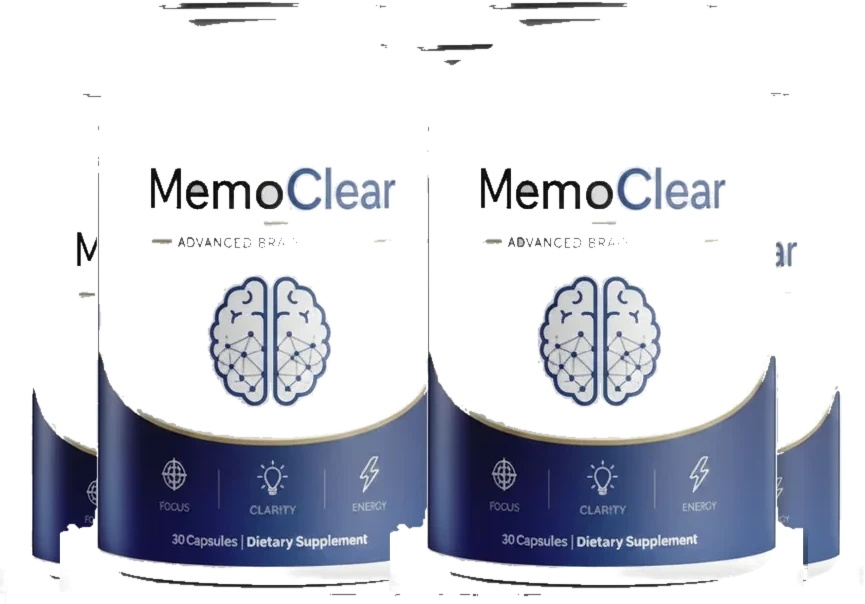
A stimulant-free daily capsule built for consistency, with the full panel published so you know what you are giving time to work. If you have wondered how long nootropics take to work, the answer is: plan for eight to twelve weeks and start the clock properly.
Prefer the ingredient breakdown first? Read the full Memoclear ingredient and label guide, or see which brain ingredients hold up in nootropics that actually work by replicated trial evidence.