Are There Any Nootropics That Actually Work? What Replicated Trials Show
Quick answer: are there any nootropics that actually work?
Yes, a short list of them, but the list is far shorter than the advertising suggests. Caffeine paired with L-theanine, creatine, and a daily multivitamin in older adults are the ingredients that have been tested more than once by separate research groups and produced an effect in the same direction each time. Almost everything else sits in a middle tier of one small trial, one laboratory, or animal work that has never been repeated in people, and a few well-known ingredients were tested at scale and did not hold up.
- Best replicated: caffeine with L-theanine for attention; creatine for aspects of memory under stress or sleep loss.
- Tested and largely negative: ginkgo biloba in large, long-running trials of older adults.
- Rule of thumb: one trial is a hypothesis, two independent trials are evidence.
What "actually works" has to mean before we name names
Almost every brain ingredient on the market can point at a study. That is not the useful question. The useful question is how many times an effect has appeared when different people, with different incentives, in different countries, ran the test again. Science is not a collection of findings; it is a filter, and the filter only starts working on the second attempt.
So the bar used throughout this article is deliberately boring. An ingredient counts as supported when there are at least two randomised, placebo-controlled trials in humans, run by research groups that are not the same group twice, reporting an effect in the same direction on a pre-specified measure. Anything short of that gets described honestly as promising, thin or untested rather than dressed up.
Three things quietly wreck the evidence base for cognition in particular. The first is the file-drawer problem: trials that find nothing are much less likely to be written up, so the published record skews positive before anyone has cheated. The second is outcome shopping. A cognitive battery might contain a dozen tasks and several scores per task, and if you are free to report whichever moved, something always moves. The third is practice effects. People get better at memory tasks simply by having sat them before, which is exactly why a placebo group is not optional.
Trial size matters too. A crossover design, where each person takes both the ingredient and the placebo in turn, squeezes more signal out of a small group, which is why so much acute nootropic research uses it. That design is a strength for detecting a same-day effect and useless for telling you what twelve weeks of daily use does.
Are there any nootropics that actually work? The replicated shortlist
Caffeine with L-theanine. This pairing has been run repeatedly by independent groups, usually as an acute crossover trial in healthy young adults, and the pattern is consistent: attention on demanding tasks improves, task-switching gets cleaner, and the subjective jitter that caffeine alone can bring is blunted. The honest caveats are that the trials are small, most measure a single dose rather than months of use, and several were funded by companies with an interest in tea. Even so, this is the closest thing to a settled finding in the field. Note also that it is the reason so many people search for a best brain supplement without caffeine: the stimulant half is the part that costs you sleep.
Creatine. Long typecast as a gym product, creatine has accumulated real cognitive data. A 2023 pooled analysis of randomised trials concluded it can support aspects of memory, and the effect is clearest where the brain is metabolically stretched, notably during sleep deprivation or sustained mental load. There is also a plausible pattern in the subgroup data: people who eat little or no meat start with lower stores and appear to have more room to move. The practical catch, which we return to below, is that the studied amounts are measured in grams per day, not milligrams.
A daily multivitamin, in older adults. Several substudies within one large trial programme, COSMOS, reported modest memory benefits in adults over 60 taking a plain daily multivitamin and a meta-analysis of three of its cognitive studies pointed the same way. Because those substudies used different assessment methods and different participant subsets, the result is sturdier than a single paper, though it is not the same as fully independent replication by an unrelated team. It also says nothing about healthy people in their twenties.
Correcting an actual shortfall. The least glamorous entry is the most reliable. If someone is genuinely low in vitamin B12, iron or vitamin D, restoring normal levels can change how they think and feel. That is not a nootropic effect; it is repair. It is also the reason a blood test is a better first purchase than a capsule.
Want the evidence and the label in one place?
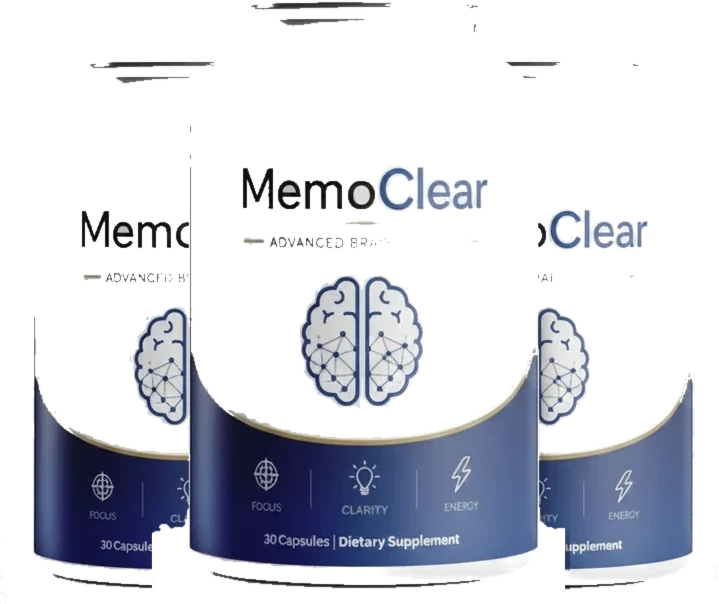
Memoclear is a stimulant-free daily capsule built around blood-flow amino acids and B-vitamin support. We publish the panel, the amounts, and the honest gaps — useful if you have been searching for a best daily nootropic supplement and want to check the numbers yourself.
Check Availability & OptionsThe middle tier: interesting, but resting on a single study
This is where most of the market lives, and where the language on the box does the heaviest lifting. None of the following is fraudulent. All of it is early.
Bacopa monnieri has a handful of small randomised trials, mostly running eight to twelve weeks, several of which reported better delayed recall. The samples are small, a large share of the work comes from a narrow set of research centres, and stomach upset is a common enough complaint that dropout matters. It is the strongest of the herbal candidates and still not settled.
Rhodiola rosea is mostly studied for fatigue rather than memory, and the results are inconsistent. When the outcome is "felt less tired during a night shift", you are measuring something real but very different from a change in cognition.
Lion's mane is a good example of how a mechanism becomes a marketing claim. The compelling work is largely in cell cultures and rodents, showing effects on nerve growth factor. The human trials are few, small and short. That is a reason for curiosity, not a reason for confidence.
Citicoline and alpha-GPC both have small trials pointing at attention and processing speed, and both suffer from the same problem: much of the research is sponsored by the ingredient supplier. Sponsorship does not make a result wrong, but it belongs in your reading of it.
Blood-flow amino acids such as L-citrulline and L-arginine occupy an unusual position. The evidence that they raise nitric oxide and support circulation is genuinely strong, but almost all of it comes from exercise physiology, where the outcome is blood pressure or performance rather than a memory score. Applying that to focus is a reasonable inference. It is not a demonstrated result, and anyone telling you otherwise has skipped a step. We go through the same distinction ingredient by ingredient in our piece on what the research shows for memory and focus nutrients.
Evidence strength at a glance
| Ingredient | Human randomised trials | Repeated by independent groups? | What the evidence supports |
|---|---|---|---|
| Caffeine + L-theanine | Several, mostly acute crossover | Yes | Attention and task-switching on demanding work |
| Creatine | Multiple, pooled in a 2023 analysis | Yes | Aspects of memory, clearest under sleep loss or stress |
| Daily multivitamin (60+) | Several substudies in one large programme | Partly | Modest memory support in older adults |
| Bacopa monnieri | A handful, 8–12 weeks | Partly | Delayed recall in small samples |
| Citicoline / alpha-GPC | Few, often supplier-funded | No | Attention, early signal only |
| L-citrulline / L-arginine | Many, but on circulation not memory | Yes, for blood flow | Nitric oxide and blood-flow support |
| Lion's mane | Very few, small and short | No | Mechanism in animals; human case unproven |
| Ginkgo biloba | Large, long-running | Yes | Did not show the hoped-for cognitive protection |
The most useful sentence in supplement research is not "a study showed". It is "and then someone else tried it again". Everything before the second attempt is a lead, not a finding.
Why a single positive trial is such a weak signal
It is worth understanding why the "one study" tier deserves so much scepticism, because the instinct to treat a published paper as settled is strong and expensive.
Start with size. A trial of thirty people cannot reliably detect a small effect, so any effect it does detect has to be large to reach significance. In a noisy field, the easiest way to produce a large apparent effect is chance. Statisticians call the consequence the winner's curse: the first published estimate of an effect is systematically bigger than the truth, and replications drift downward.
Then add flexibility. In a typical cognition study the researcher chooses the battery, the scoring, the covariates, and which timepoint to treat as primary. Each choice is defensible on its own. Taken together they create enough paths through the analysis that a positive result is close to guaranteed somewhere. Preregistration, where the analysis plan is filed before the data exist, exists precisely to close that door, and much older nootropic research predates the practice.
Finally, consider who is watching. Psychology and biomedicine both went through a bruising decade discovering that a substantial share of famous findings would not replicate. Cognitive supplement research is smaller, less scrutinised and more commercially motivated than either. There is no reason to assume it fares better, and every reason to hold it to the same standard.
None of this means single-trial ingredients are useless. It means the correct posture is "worth watching" rather than "proven", and that a product built entirely from that tier is selling you optimism.

Reading a label against the dose that was actually studied
Suppose an ingredient clears the replication bar. You still have one more check to run, and it is the one most buyers skip: does the product contain enough of it?
Creatine is the clearest illustration. Trials use several grams a day. A single capsule holds a few hundred milligrams of everything combined. An ingredient list that mentions creatine and a formula that delivers a studied creatine dose are completely different products, and only the panel tells you which one you are holding. The same arithmetic applies to beta-alanine and to citrulline, both of which are studied at gram-scale amounts in exercise research.
Watch for three specific label habits. "Proprietary blend" means the total is disclosed but the split is not, so an ingredient can be present in a trace amount and still headline the marketing. "Clinically studied ingredient" is a claim about the ingredient existing in literature, not about the amount in this capsule. And serving size does the quiet work: a panel that looks generous per serving may be assuming three capsules a day, so check servings per container against how long the bottle is meant to last.
This is also the fastest way to sort the field when you are comparing options for the best brain supplement for memory and focus. Ignore the front of the box, turn it over, and compare milligrams to the trial literature. It takes two minutes and eliminates most of the shortlist.
What this evidence cannot do
Here is the part that the category tends to leave out, and it matters more than any of the above.
No dietary supplement, on this list or any other, has been shown to prevent, treat, cure or reverse a disease, and cognitive decline is a disease process. Ginkgo is the cautionary tale: it was widely sold on exactly that promise, then studied properly in large long-term trials of older adults, and the protective effect did not appear. That result should make everyone more careful, not less.
The honest ceiling for the ingredients that do work is "modest, measurable under test conditions, and easily swamped by the rest of your life". None of them competes with a full night of sleep. None outperforms regular aerobic exercise for long-term brain health. None fixes an untreated thyroid problem, an iron deficiency, unmanaged blood pressure, or the cognitive fog that comes with depression or chronic stress. We map those drivers, and the supplements capable of making fog worse rather than better, in our guide to what actually causes brain fog. If your thinking has changed noticeably over weeks or months, that is a medical situation and a clinician is the right first call, not a shopping decision.
Individual variation is real too. Response depends on baseline status, diet, genetics and sleep debt, which means a well-supported ingredient can still do nothing detectable for you personally. And because supplements are regulated as food rather than medicine, "sold widely" tells you nothing about efficacy — nor does regulatory language, since no supplement in this category is FDA approved, as we explain in what FDA approval actually means for a brain supplement. Ingredients that affect blood flow deserve particular care alongside blood-pressure medication or before surgery.
Medical note: this article is general information, not medical advice. Speak to a healthcare professional before starting any supplement, especially if you are pregnant, nursing, or taking medication — several nootropic ingredients affect blood flow or interact with prescription drugs.
Frequently asked questions
Are there any nootropics that actually work for a healthy adult?
Yes, a few. Caffeine combined with L-theanine has repeated randomised trials behind it for attention, and creatine has pooled trial evidence for aspects of memory, with the clearest signal when someone is sleep deprived or under heavy mental load. The effects are modest and fall well short of what advertising implies.
How many trials should an ingredient have before I take it seriously?
At least two randomised, placebo controlled human trials run by separate research groups, reporting an effect in the same direction. One trial is a hypothesis. Animal and laboratory work tells you a mechanism is possible, not that it happens in a person.
Does a longer ingredient list mean a stronger nootropic?
No. A long list often means each ingredient sits well below the amount used in research, because only so much powder fits in a capsule. Compare the milligram amounts on the Supplement Facts panel against the doses used in trials before you judge a formula.
Can a nootropic supplement stop memory decline as I get older?
No dietary supplement has been shown to prevent, treat or reverse any disease, and that includes cognitive decline. Supplements are sold to support normal function. If your memory or thinking has changed noticeably, that is a reason to see a clinician rather than to buy a supplement.
Scientific references
- Prokopidis K. et al. — Effects of creatine supplementation on memory in healthy individuals: a systematic review and meta-analysis of randomized controlled trials (Nutrition Reviews, 2023)
- NIH NCCIH — Dietary supplements and cognitive function, dementia, and Alzheimer’s disease: what the science says
- National Institute on Aging — Cognitive health and older adults, including supplements and brain health
- Nawarathna G.S. et al. — High-dose L-theanine–caffeine combination improves neurobehavioural and neurophysiological measures of selective attention in acutely sleep-deprived young adults (British Journal of Nutrition, 2025)
- Harvard Health Publishing — Foods linked to better brainpower
Where Memoclear fits on this map
A stimulant-free daily capsule built on blood-flow amino acids, with the full panel published so you can run the dose check yourself. If you have been asking where to buy brain supplements without wading through hype, start with the label.
Prefer the ingredient breakdown first? Read the full Memoclear ingredient and label guide, or compare formats in all-in-one nootropics versus single ingredients.