Citicoline, Bacopa & Lion's Mane: The Nootropic Supplement Stack That Covers Both Timelines
Quick answer: why combine citicoline, bacopa and lion's mane?
These three cover different timelines, which is why they belong in one nootropic supplement. Citicoline supports faster attention and processing speed within hours to days, while bacopa monnieri and lion's mane are slow-builders that support memory over eight to twelve weeks. Combined at clinically relevant doses, you get a same-day lift and a long-term build from a single capsule instead of three bottles.
- Fast lane: citicoline supports attention and processing speed early.
- Slow lane: bacopa and lion's mane build memory support over 8–12 weeks.
- The catch: stacking only beats singles when each dose is real, not a token pinch.

Most people who buy a nootropic supplement make the same understandable mistake: they judge it in the first week. They take it for seven days, feel nothing dramatic, and quit — or they feel a same-day lift, assume that is the whole product, and never notice the slower benefit that was still weeks away. Both errors come from treating every ingredient as if it works on the same clock. It does not. The smartest way to think about a nootropic supplement is as two lanes running at once: a fast lane for attention, and a slow lane for memory. Citicoline, bacopa monnieri and lion's mane happen to be three of the most evidence-backed ingredients in the category, and they line up almost perfectly across those two lanes.
This article maps out how each one works, on what timeline, and why combining them at proper doses tends to beat taking any one of them alone — provided the label is honest about the amounts. That last caveat is the whole game, so we will keep coming back to it.
Citicoline: the fast lane of the nootropic supplement
Citicoline (also sold as CDP-choline) is the ingredient that gives a stack its early, noticeable character. It is a choline source that supports the production of acetylcholine, the neurotransmitter most tied to attention and focus, and it also plays a role in the membranes of brain cells. The practical upshot is a timeline you can actually feel: rather than the eight-to-twelve-week wait that memory ingredients demand, citicoline tends to support attention and processing speed on a scale of hours to days.
That speed is doing quiet strategic work inside a combined formula. When someone starts a memory-focused supplement, the biggest risk to their results is not biology — it is quitting at week two because nothing seems to be happening. A fast-acting ingredient like citicoline provides an early, honest signal that something is active, which keeps people consistent long enough for the slow-builders to do their job. Adherence is the hidden ingredient in every trial that ever showed a benefit, and citicoline helps protect it.
None of this makes citicoline a stimulant. It is not caffeine, it does not spike and crash, and it will not rescue a night of no sleep. It is a subtle support for focus, best judged over a normal working week rather than a single dramatic afternoon. If the idea of fast-versus-slow effects is new to you, our guide on how long nootropics take to work lays out realistic timelines ingredient by ingredient.
Bacopa and lion's mane: the slow lane that actually builds memory
Now the patient half of the stack. Bacopa monnieri is one of the most studied herbal nootropics for memory: a meta-analysis of randomised controlled trials in the Journal of Ethnopharmacology found consistent improvements in memory recall and in the speed of processing new information. But every one of those trials shares a feature the marketing tends to bury: the benefit shows up after weeks of daily use, commonly in the eight-to-twelve-week range. Bacopa taken for five days has not failed; it simply has not started yet.
Lion's mane (Hericium erinaceus) is the other slow-builder, and here we have to be careful, because the human evidence in healthy adults is thinner than the marketing suggests. The most-cited recent trial is a 2023 double-blind pilot study in 41 healthy adults aged 18–45 at Northumbria University. After a single 1.8 g dose, participants were faster on the Stroop task at 60 minutes; after 28 days there was only a non-significant trend towards lower subjective stress, and the authors themselves reported null and limited negative findings alongside it. What that trial did not show was a memory improvement. So the honest position is that lion's mane is promising and under-powered rather than established, and that most of the stronger-sounding results come from older or already-impaired groups rather than the healthy people who actually buy these products. Like bacopa, it is a compound-over-time ingredient, not a switch you flip on Monday.
Put those two beside citicoline and the design intent becomes obvious. Citicoline covers the days-to-weeks you would otherwise spend feeling nothing. Bacopa and lion's mane cover the months where the memory-oriented benefit actually accrues. One ingredient keeps you in the game; the other two are the reason the game is worth playing. Just as importantly, they work through different mechanisms, so combining them tends to complement rather than collide.
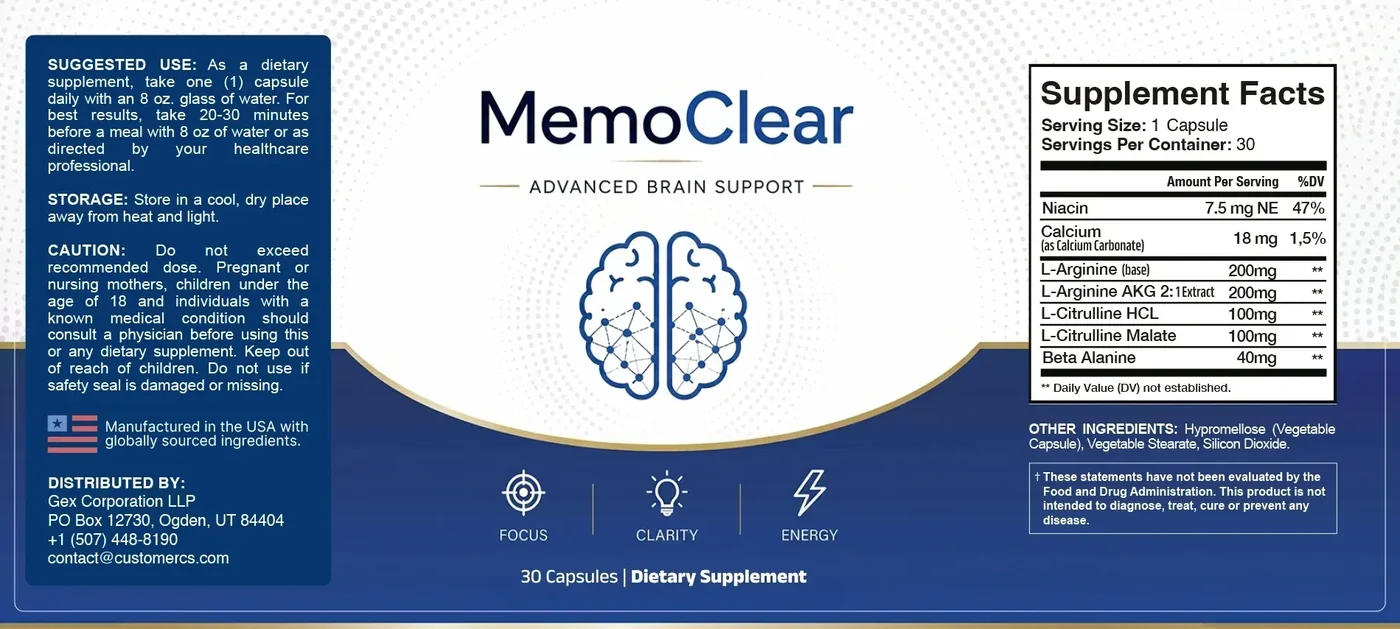
Want the whole stack in one daily capsule?
Building this yourself means three bottles, three expiry dates and three chances to run out. Memoclear brings a fast-and-slow nootropic approach into one caffeine-free capsule, with every amount disclosed so you can verify the doses are real.
See the Memoclear Formula & OptionsWhy stacking beats single ingredients — when the doses are real
Here is the central claim, stated carefully: a nootropic supplement that stacks complementary ingredients beats single ingredients when, and only when, each ingredient is present at a clinically relevant dose. That conditional is not fine print. It is the difference between a genuinely good product and a long, impressive-looking ingredient list that does nothing.
The case for stacking, at proper doses, is strong. The three ingredients above hit different neurotransmitter and cellular mechanisms, so their effects add rather than overlap. They cover different timelines, so the product feels like it is working early and keeps working later. And practically, one capsule a day is enormously easier to stay consistent with than three separate products — which, again, is the variable that most often decides whether anyone sees a result at all.
The case against stacking is really a case against bad stacking. A capsule can only hold so much powder, so a formula that crams in a dozen fashionable ingredients has to shrink each one, often below the amount used in research. When that happens, you are paying for a list, not a dose. This is the exact trade-off we dissect in our deep dive on all-in-one nootropics versus single-ingredient dosing — and it is why the number of ingredients on a label tells you almost nothing on its own.
So the rule that cuts through the marketing is simple: judge a stack by its smallest real dose, not its longest ingredient list. A focused three-ingredient formula at studied amounts will out-perform an eight-ingredient formula where everything is a token pinch. To apply that rule you need the amounts printed — which is why disclosed dosing, not a proprietary blend, is non-negotiable for a stack you actually want to work.
A good stack is not the one with the most ingredients. It is the one where the fewest ingredients are each dosed like the studies that made them famous.
Fast versus slow: what to expect, and when
| Ingredient | Main role | Realistic timeline | How to judge it |
|---|---|---|---|
| Citicoline (CDP-choline) | Attention, processing speed | Hours to a few days | Notice focus across a normal work week |
| Bacopa monnieri | Memory recall, learning | About 8–12 weeks | Track memory tasks over two to three months |
| Lion's mane | Memory, processing support | Weeks, building over months | Judge slowly; do not quit at week two |
Read down that timeline column and the design writes itself: one ingredient answers "is this doing anything?" in the first week, and two answer "did this help?" a couple of months later. A stack that mixes those clocks on purpose is far more satisfying to take than three ingredients that all make you wait.

Three objections, answered honestly
"If it doesn't work in a week, it doesn't work." This is the single most expensive myth in the category. Two of the three ingredients here are designed to build over eight to twelve weeks; judging them at day seven is like weighing yourself an hour after starting a gym membership. Citicoline is the part you might feel early; bacopa and lion's mane are the part you commit to.
"More ingredients means a better nootropic supplement." Almost the opposite. Beyond a handful of ingredients, each new one competes for the same limited capsule space and pushes the others toward token doses. A tightly dosed trio usually beats a sprawling blend. Count doses, not ingredients.
"I should just buy them separately to save money." You can, and for a dedicated experimenter that has real advantages. But three products mean three subscriptions, three expiries and three more chances to skip a day — and skipped days are what quietly sink slow-building ingredients. For most people, a single well-dosed capsule wins on the only metric that matters: actually taking it every day for long enough.
What this stack can and cannot do
Honesty is the whole brand here, so the ceiling matters as much as the promise. This stack, or any nootropic supplement, is support for normal cognitive function in healthy adults. It is not a treatment, and no ingredient discussed here is intended to diagnose, treat, cure or prevent any disease. If your memory or concentration has changed in a way that worries you, that belongs with a clinician, not a supplement label.
It also will not out-run the fundamentals. Sleep, aerobic exercise, managed stress, treated blood pressure and a decent diet move cognition more than any capsule, and a stack sits on top of those inputs rather than replacing them. Used well, a properly dosed combination is a small, worthwhile edge for a healthy person willing to be patient. Used as a rescue for a bad routine, it is a disappointment waiting to happen. We keep our own claims tied to that honest ceiling, which is exactly the standard we apply to the evidence behind the Memoclear formula.
Medical note: this article is general information, not medical advice, and no supplement here is intended to diagnose, treat, cure or prevent any disease. Speak to a healthcare professional before starting any nootropic supplement, especially if you are pregnant, nursing, taking medication, or managing a health condition.
Frequently asked questions
What is the best nootropic ingredient combination?
There is no single best combination for everyone, but citicoline, bacopa monnieri and lion's mane is a well-reasoned trio because they cover different timelines. Citicoline supports faster attention and processing speed, while bacopa and lion's mane are slow-builders that support memory over eight to twelve weeks. A combination only works if each ingredient is present at a clinically relevant dose rather than a token amount.
Can you take citicoline, bacopa and lion's mane together?
For most healthy adults these three are commonly combined and are generally well tolerated together, because they work through different mechanisms rather than competing. As with any supplement, check the doses, take it with food if it upsets your stomach, and clear it with a clinician first if you are pregnant, nursing, taking medication, or managing a health condition.
Which nootropic works fastest for focus?
Of these three, citicoline works fastest, supporting attention and processing speed on a timeline of hours to days rather than weeks. Bacopa and lion's mane are slow-builders aimed at memory, so you should not judge them in the first week. This split is exactly why combining a fast ingredient with slow ones makes practical sense.
Is an all-in-one nootropic better than single ingredients?
An all-in-one nootropic supplement is better when it combines ingredients with complementary timelines at clinically relevant doses, which stacking can achieve more conveniently than buying three separate products. It is worse when a long ingredient list forces every dose down to a token amount. The deciding factor is disclosed, adequate dosing, not the number of ingredients on the label.
Scientific references
- NIH Office of Dietary Supplements — Choline fact sheet (citicoline and acetylcholine)
- Kongkeaw C. et al. — Meta-analysis of randomized controlled trials on cognitive effects of Bacopa monnieri extract (Journal of Ethnopharmacology, 2014)
- Docherty S. et al. — The acute and chronic effects of lion’s mane mushroom supplementation on cognitive function, stress and mood in young adults: a double-blind, parallel groups, pilot study (Nutrients, 2023)
- NIH NCCIH — Dietary supplements and cognitive function, dementia, and Alzheimer’s disease: what the science says
- Harvard Health Publishing — Twelve ways to keep your brain young
Related reading
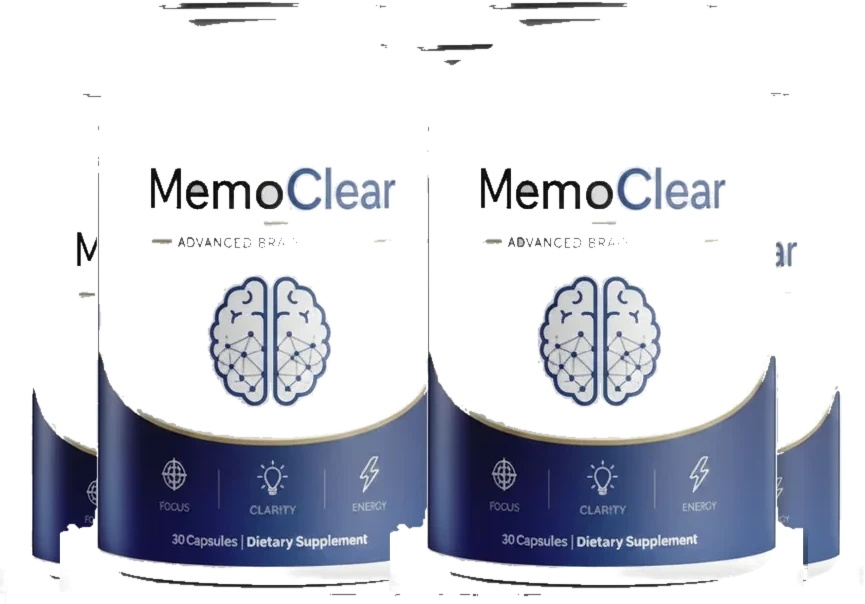
One capsule, a fast-and-slow nootropic approach
Skip the three-bottle juggling act. Memoclear delivers a caffeine-free daily capsule with every amount disclosed, so you can check that the fast and slow ingredients are each dosed to matter.
New to slow-building ingredients? Read how long nootropics take to work before you judge week one.