Best Brain Booster Supplement: What That Label Actually Means
Quick answer: what does "brain booster" mean on a label?
Nothing legally. "Booster", "advanced", "extra strength" and "clinical strength" are marketing words with no regulatory definition, no required ingredient and no minimum dose behind them. The only text on the packaging that is obliged to be accurate is the Supplement Facts panel, the ingredient list beneath it, and the net quantity — so those are the parts worth reading first.
- No definition: booster, advanced, premium and clinical strength require nothing on the panel.
- Real information: Supplement Facts, per-serving amounts, servings per container, other ingredients.
- Legal boundary: supplements may say "supports normal function"; they may not claim to treat or prevent disease.
Why the front of the box is the least informative part
Packaging is split into two very different documents that happen to share a bottle. One half is regulated: the Supplement Facts panel, the ingredient statement, the net contents, the manufacturer or distributor details, and the disclaimer about the Food and Drug Administration. Those elements have rules attached about what must appear and how it must be expressed.
The other half is advertising, and it is governed mainly by the general prohibition on being misleading. That is a real constraint, but it is a much looser one than "state the milligrams". Within it, a brand can call a product advanced, premium, elite, ultra, maximum or next-generation without any of those words obliging it to contain anything at all.
This is not a conspiracy. It is just how the categories work, and it applies equally to yoghurt and shampoo. The problem in this particular aisle is that the marketing vocabulary borrows heavily from medicine, so it reads as though it carries clinical weight. "Clinical strength" sounds like a dosage standard. It is a brand name for a feeling.
So when you set out to identify the best brain booster supplement for your situation, the practical move is to invert your reading order. Turn the bottle over first. If the panel does not support the front, the front is fiction.
Decoding the eleven phrases you will actually meet
"Booster" and "boost". No definition, no requirement. It is a promise of direction with no magnitude attached.
"Advanced formula". Advanced relative to what is never stated, because it does not have to be. Frequently it signals a reformulation, which may mean added ingredients or simply new artwork.
"Clinical strength" and "clinically studied". These sound like the same claim and are not. "Clinically studied" usually attaches to an ingredient that appears somewhere in published research. "Clinical strength" implies a dose. Neither requires the finished product to have been tested, and neither guarantees the capsule holds the amount used in the study. The question to ask is always: studied at what dose, and does this serving deliver it?
"Doctor formulated" or "physician developed". A person with a medical qualification was involved somewhere in the process. There is no requirement that they be an expert in cognition, no requirement to disclose their role, and no independent verification.
"Proprietary blend". This one is genuinely informative, in the negative. It permits the maker to disclose only the combined weight of a group of ingredients rather than each amount. Ingredients within it are listed by descending weight, so the first name is the largest share and everything after it may be a rounding error.
"Natural" and "plant-based". Almost unconstrained as marketing terms in this category. Natural does not mean gentle, well tolerated, or free of drug interactions. Several of the most potent substances known are entirely natural.
"Non-GMO", "gluten-free", "vegetarian capsule". These are usually accurate and usually irrelevant to whether the formula does anything. They answer dietary questions, not efficacy questions.
"FDA-registered facility". Registration and good manufacturing practice inspection concern how the product is made: cleanliness, batch records, identity testing. That matters for safety and for the panel being true. It says nothing about effectiveness, and it is emphatically not FDA approval.
"Third-party tested". Potentially the most meaningful badge on the box, if the certifying body is named and the certificate is findable. Unnamed third-party testing is a sentence, not a fact.
Marketing phrase versus what the panel must show
| Phrase on the front | What it legally requires | What to check on the panel | Useful signal? |
|---|---|---|---|
| Brain booster | Nothing | Which ingredients, at what milligrams | No |
| Advanced / premium | Nothing | Compare with the previous formula if you can | No |
| Clinical strength | Nothing | Per-serving amount versus the studied dose | Only if the numbers match |
| Clinically studied ingredient | Ingredient appears in research | Whether this serving delivers the studied amount | Partly |
| Doctor formulated | Involvement of a qualified person | Whether the formula design is explained anywhere | Weak |
| Proprietary blend | Combined weight only | Whether individual milligrams are disclosed at all | Yes, as a warning |
| FDA-registered facility | Manufacturing registration | Nothing about efficacy | Safety only |
| Third-party tested | Nothing unless the body is named | Named certifier and a retrievable certificate | Yes, if named |
Read a panel instead of a slogan
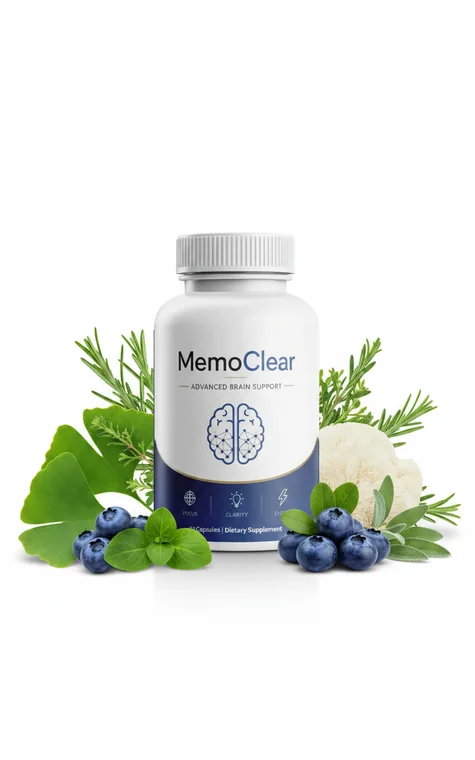
Memoclear publishes each amount separately — niacin, calcium, arginine, citrulline and beta-alanine, per capsule, no blend hiding the split. Apply the same test to anything you are weighing as a best brain supplement for memory and focus.
Check Availability & OptionsThe claim rules that shape every sentence you read
Once you know the boundary a supplement writer is working inside, the copy becomes much easier to parse.
A dietary supplement in the United States may make a structure or function claim: a statement about how an ingredient affects the normal structure or function of the body. "Supports normal memory function", "helps maintain healthy blood flow", "supports the nervous system" are all in bounds. These must be truthful and not misleading, must be accompanied by the familiar disclaimer that the statement has not been evaluated by the Food and Drug Administration, and must not stray into disease territory.
What is out of bounds is a disease claim: any statement that the product diagnoses, treats, cures, mitigates or prevents a disease. "Reverses memory loss", "prevents cognitive decline", "treats brain fog caused by a condition" all cross the line, and a product using that language is telling you it either does not know the rules or does not care about them.
This is why supplement copy has its distinctive hedged rhythm. It is not necessarily evasiveness. It is a legal register. The useful consequence is that hedged language is normal and unhedged language is a red flag, which is the opposite of the instinct most buyers bring to the shelf.
There is one more layer worth knowing. Personal-story imagery, dramatic before-and-after framing and urgency devices are governed by advertising rules rather than labelling rules, and enforcement is complaint-driven and slow. A confident claim on a website has cleared a much lower bar than a claim on the panel.

Treat the front of the box as an advertisement, because that is exactly what it is. The back of the box is the only part anyone had to get right.
How to read a Supplement Facts panel in the right order
The panel has a structure, and reading it in sequence saves time.
Serving size first. Everything below it is per serving, not per capsule and not per day. A panel showing generous numbers on a three-capsule serving is a different product from the same numbers on one capsule. Cross-check against servings per container to see how long a bottle really lasts.
Then the vitamins and minerals with a percent daily value. These have established reference intakes, so the percentage tells you something concrete. Very high percentages are not automatically better; for some nutrients there are upper intake levels worth respecting, particularly if you also take a multivitamin.
Then the ingredients marked with a double asterisk. That symbol means no daily value has been established, which is the case for most amino acids and botanicals. Here the number in milligrams is the only guide, and it is meaningless until you compare it with the amount used in research. This is where most of the real work happens.
Then the form of the ingredient. Forms are not interchangeable. Citrulline malate is citrulline bound to malic acid, so a given weight delivers less free citrulline than the same weight of pure L-citrulline. Magnesium oxide and magnesium glycinate differ in absorption. Standardised botanical extracts state the marker compound percentage, and an unstandardised powder does not.
Finally, "other ingredients". Capsule material, flow agents, anti-caking agents. Usually unremarkable, occasionally the answer to a tolerance question.
Run that sequence and you can rank most of a shelf in a few minutes. For the arithmetic behind why blended capsules rarely reach trial amounts, see our breakdown of all-in-one formulas versus single-ingredient dosing.
Applying it to a real panel
Take the kind of stimulant-free formula this site covers. Memoclear's panel lists niacin and calcium with percent daily values, then a set of double-asterisk entries: L-arginine as base and as alpha-ketoglutarate, L-citrulline in two forms, and beta-alanine, all per single capsule.
Reading it properly produces a mixed and honest verdict. The disclosure is good: individual milligrams are stated rather than buried in a blend, and the serving is one capsule so no multiplication is needed. The forms are specified, which is more than many competitors manage. On the other hand, the amino acid amounts sit in the hundreds of milligrams, while the circulation research on citrulline and arginine generally uses gram-scale doses, and beta-alanine research uses several grams a day. That gap is real and worth stating plainly rather than glossing.
What follows from that is a positioning judgement, not a verdict on quality. A panel like this is daily nutritional support for blood-flow pathways and B-vitamin status. It is not an acute performance dose, and any product in this format that implies otherwise is overreaching. Knowing which of those two things you want is most of the buying decision.
What a label can never tell you
Even a perfectly transparent panel has hard limits, and it is worth being blunt about them.
A panel cannot tell you whether the product works for you. It reports composition, not effect. Two people with the same bottle can have genuinely different experiences depending on baseline nutrient status, diet, sleep, age and medication.
A panel cannot tell you whether the finished formula has been tested as a whole. Almost none have. Ingredient evidence does not transfer to a product any more than a list of good ingredients guarantees a good meal. Nor can a panel tell you anything about regulatory status, which is its own tangle of half-understood phrases — we unpick what FDA approved and FDA registered really mean in our look at whether Neuriva is FDA approved and who makes it.
A panel cannot make a disease claim true. No dietary supplement has been shown to prevent, treat, cure or reverse cognitive decline or any other disease, and no wording on any box changes that. If your memory, word-finding or concentration has changed noticeably over weeks or months, the appropriate response is a clinical assessment, not a purchase.
Finally, a panel cannot flag your interactions. Ingredients that support blood flow warrant a conversation with a pharmacist or clinician if you take blood-pressure medication or anticoagulants, or if surgery is planned. That check is on you, and no certification badge substitutes for it. It is also worth knowing that a supplement can be the cause of a symptom rather than the cure for it, which we work through in our guide to what causes brain fog, including the supplements that trigger it.
Medical note: this article is general information, not medical advice. Speak to a healthcare professional before starting any supplement, especially if you are pregnant, nursing, or taking medication — ingredients that affect circulation can interact with prescription drugs.
Frequently asked questions
Does the word booster on a supplement label mean anything official?
No. Booster is marketing language with no regulatory definition and no dosage requirement behind it. It does not oblige the maker to include any particular ingredient or amount. The only part of the packaging that carries required information is the Supplement Facts panel and the ingredient list beneath it.
What does clinically studied actually claim?
Usually that the ingredient has appeared in published research somewhere, not that this finished product was tested, and not that the capsule contains the amount used in that research. Look for wording that names the finished formula and the dose per serving. If it names only the ingredient, treat it as background reading.
Why do supplement labels say supports rather than improves?
Because a dietary supplement may describe an effect on normal structure or function of the body, but may not claim to diagnose, treat, cure or prevent a disease. Supports normal memory function is permitted. Restores memory or treats decline is not, and a product using that language is telling you something about its compliance rather than its formula.
Is an FDA registered facility the same as FDA approved?
No, and the difference is large. Facility registration and good manufacturing practice audits are about how a product is made, including cleanliness, record keeping and identity testing. They say nothing about whether the formula works. No dietary supplement is approved by the FDA for effectiveness.
Scientific references
- NIH Office of Dietary Supplements — Dietary supplements: what you need to know
- NIH NCCIH — Using dietary supplements wisely
- National Institute on Aging — Cognitive health and older adults, including supplements and brain health
- Mayo Clinic — Dietary supplements: what to know before you buy
- Harvard Health Publishing — Foods linked to better brainpower
Every amount, printed and checkable
One stimulant-free capsule a day with a fully itemised panel — the standard we would apply to any product before calling it a serious option. A sensible starting point if you have been wondering where to buy brain supplements that show their numbers.
Next: when to take it. Read morning versus afternoon dosing for adults.